


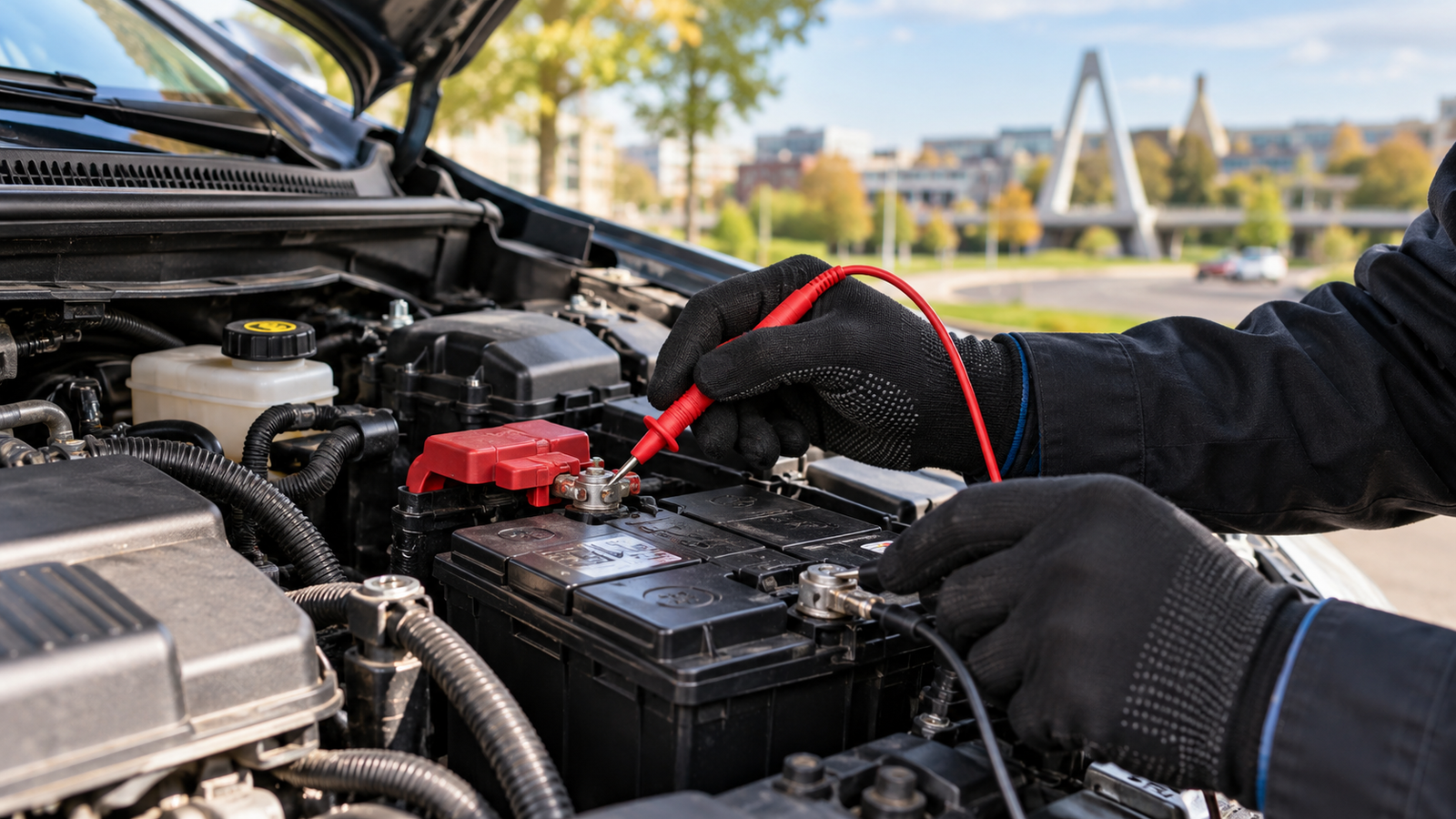
How Do You Know When Your Car Battery Needs Replacing?
Your car battery is one of those components that is easy to take for granted — right up until the moment your car refuses to start. While a failing battery can sometimes stop working with very little warning, there are often signs that it is losing its ability to hold or deliver a reliable charge.
Knowing what to look for can help you identify a weakening battery before it leaves you stranded on your driveway, at work or somewhere on the roads around Milton Keynes.
But how can you tell whether your battery is simply low on charge or actually needs replacing? Here are some of the most common warning signs to look out for.
How Long Does A Car Battery Usually Last?
There is no single lifespan that applies to every car battery. Battery life can vary depending on the vehicle, driving habits, weather conditions, electrical demands and how well the charging system is working.
Some batteries can provide reliable service for several years, while others may deteriorate sooner, particularly if a vehicle is regularly used for short journeys.
The important thing is that age alone does not always tell you whether a battery is healthy. A battery can appear fine until its ability to hold a charge starts to decline.
If your battery is getting older and you have started noticing starting or electrical problems, it is sensible to have it checked rather than waiting for it to fail completely.
- Your Engine Takes Longer To Start
One of the clearest signs of a weak battery is a noticeable change in how the engine starts.
When you turn the key or press the start button, the engine may crank more slowly than usual before firing. You may notice that the starter motor sounds weaker or that the engine takes a few extra seconds to start.
A healthy battery should provide enough power for the starter motor to turn the engine over strongly. If the cranking becomes noticeably slower, the battery may no longer have sufficient capacity.
It is worth remembering that slow starting can have other causes too, including problems with the starter motor or charging system. This is why proper diagnosis is useful before replacing the battery unnecessarily.
- Your Car Needs Frequent Jump Starts
If you have needed to jump-start your vehicle more than once recently, it is worth investigating why.
A jump start can get you moving again, but it does not necessarily solve the underlying problem. If the battery repeatedly becomes flat after relatively normal use, it may be struggling to retain a charge.
There are several possible explanations. The battery itself could be reaching the end of its service life, the alternator may not be charging it correctly, or there could be an electrical fault causing excessive battery drain when the vehicle is switched off.
Repeatedly relying on jump leads without finding the cause can leave you at risk of another breakdown.
- Your Lights Appear Dimmer Than Usual
A weakening battery can sometimes be accompanied by electrical symptoms.
You might notice headlights appearing less bright, especially when the engine is off, or interior lights that seem weaker than they used to be. Other electrical equipment may also appear less responsive.
However, dim lights do not automatically mean that the battery needs replacing. The alternator, wiring, electrical connections and other components can also affect the vehicle’s electrical system.
For that reason, unusual electrical behaviour should be treated as a reason to have the charging system checked rather than assuming the battery is definitely at fault.
- You Notice Electrical Problems
Modern cars rely on a large number of electronic systems, and a weak or unstable power supply can sometimes cause unusual electrical behaviour.
Depending on the vehicle, you could experience things such as:
- Flickering lights
- Electrical accessories behaving unpredictably
- Start-stop systems becoming unavailable
- Warning messages appearing on the dashboard
- Problems with central locking or other powered features
These symptoms can have many different causes, so they should not automatically be blamed on the battery. However, if several electrical issues appear alongside slow engine cranking, a battery or charging-system inspection would be worthwhile.
- The Car Struggles More In Cold Weather
Cold weather can make an already weak battery more obvious.
Starting the engine requires considerable electrical power, and lower temperatures can reduce battery performance. At the same time, cold conditions can make the engine harder to turn over.
This means a battery that copes reasonably well during warmer months may struggle when temperatures fall.
For drivers in Milton Keynes and the surrounding areas, this can become particularly noticeable during the colder part of the year. If your vehicle is already showing signs of a weak battery, winter can turn a minor warning into a genuine starting problem.
- You Mostly Make Short Journeys
Short journeys can place additional demands on a car battery.
Starting the engine uses a significant amount of electrical energy. During a longer drive, the alternator has more opportunity to replenish the charge used during starting and to power the car’s electrical systems.
If you regularly make very short trips, the battery may not always have enough time to recover fully.
This does not necessarily mean that every car used for short journeys will develop a battery problem, but frequent short trips can contribute to charging issues, particularly when combined with cold weather and heavy use of lights, heating or other electrical equipment.
If you mainly use your car for short local journeys, keeping an eye on starting performance is especially important.
- Your Battery Is Visibly Damaged
Sometimes there are physical signs that a battery needs attention.
If the battery casing appears cracked, swollen or otherwise damaged, it should be inspected as soon as possible. Corrosion around the terminals can also indicate a problem with the battery or its connections.
Do not ignore obvious physical damage. A battery is an important part of the vehicle’s electrical system, and damaged components should be assessed by someone qualified to determine whether replacement is required.
- Your Battery Warning Light Comes On
A battery-shaped warning light on the dashboard is an important sign that something may be wrong with the vehicle’s charging system.
Despite what its name might suggest, this light does not necessarily mean that the battery itself has failed.
It can indicate a problem with the alternator or another part of the charging system. If the warning light remains illuminated while you are driving, it is sensible to have the vehicle inspected promptly.
Continuing to drive with a charging-system problem could eventually leave the battery without enough power to keep the vehicle’s electrical systems operating.
Battery Problem Or Alternator Problem?
One of the difficulties with battery-related symptoms is that the battery is not always the actual cause.
The battery and alternator work together. The battery provides the electrical power needed to start the vehicle, while the alternator helps recharge the battery and supplies electrical power while the engine is running.
If the alternator is not charging correctly, a perfectly good battery can eventually become flat.
Equally, a worn-out battery may fail to hold a charge even when the alternator is working properly.
This is why replacing a battery based purely on one symptom can sometimes fail to solve the problem. A proper battery and charging-system test can help identify the actual fault.
Can A Battery Be Recharged Instead Of Replaced?
Sometimes, yes.
If a healthy battery has become discharged because the vehicle has been left unused, lights have been left on or a similar issue has occurred, recharging it may restore normal operation.
However, recharging will not restore an old battery that has lost significant capacity.
If the battery repeatedly goes flat after being charged, or the car continues to struggle to start, it may be approaching the end of its useful life.
The key question is not simply whether the battery can be charged, but whether it can still hold enough charge to start the vehicle reliably.
Why It Is Worth Checking A Weak Battery Early
Waiting until a battery fails completely can be inconvenient and potentially expensive.
A flat battery can leave you unable to start your car at home or away from home, potentially disrupting work, school, appointments or other journeys.
Getting a suspected battery problem checked early can also help identify related issues with the alternator, electrical system or battery connections before they become more serious.
For drivers who depend on their car every day, preventative checks can be much less stressful than dealing with an unexpected breakdown.
The Common Battery Problems For Drivers In Bletchley And Milton Keynes
For drivers in Bletchley and across Milton Keynes, certain everyday driving habits can put additional demands on a car battery. Frequent short journeys around town, stop-start traffic and repeated trips where the engine does not run for long can all reduce the opportunity for the battery to recover the charge used when starting the vehicle.
Cold winter mornings can also expose a battery that is already becoming weak. If your car is mainly used for local journeys, you may notice symptoms such as slower starting, dimmer lights or the need for occasional jump starts before the battery fails completely.
Modern vehicles can also place considerable demands on their electrical systems, particularly when using headlights, heating, heated screens, infotainment systems and other equipment at the same time. If you are experiencing repeated battery problems around Milton Keynes, it is worth having the battery and charging system tested rather than assuming that the battery itself needs replacing.
Getting the problem checked locally in Bletchley can help identify whether the issue is simply an ageing battery or whether something else, such as the alternator or an electrical fault, is causing the battery to lose its charge.
Protecting The Charge
A car battery rarely gives a guaranteed timetable for when it will fail, but it often provides clues that its performance is declining.
Slow engine cranking, repeated jump starts, dim lights, unusual electrical behaviour and increasing difficulty starting in cold weather can all be reasons to investigate. A battery that has become physically damaged or is repeatedly going flat should also be checked.
Just as importantly, remember that battery symptoms can sometimes be caused by faults elsewhere in the vehicle’s charging or electrical system.
If your car has started to struggle when starting, or you are concerned that the battery may be nearing the end of its life, having it professionally tested can give you a much clearer answer. A battery check can determine whether the battery is healthy, needs charging or is likely to require replacement, while additional diagnostic checks can identify other faults that may be contributing to the problem.
For drivers in Bletchley and across Milton Keynes, dealing with a weakening battery before it fails completely can help keep your car dependable when you need it most.