


Driving In Milton Keynes:
A Guide For New And Returning Drivers
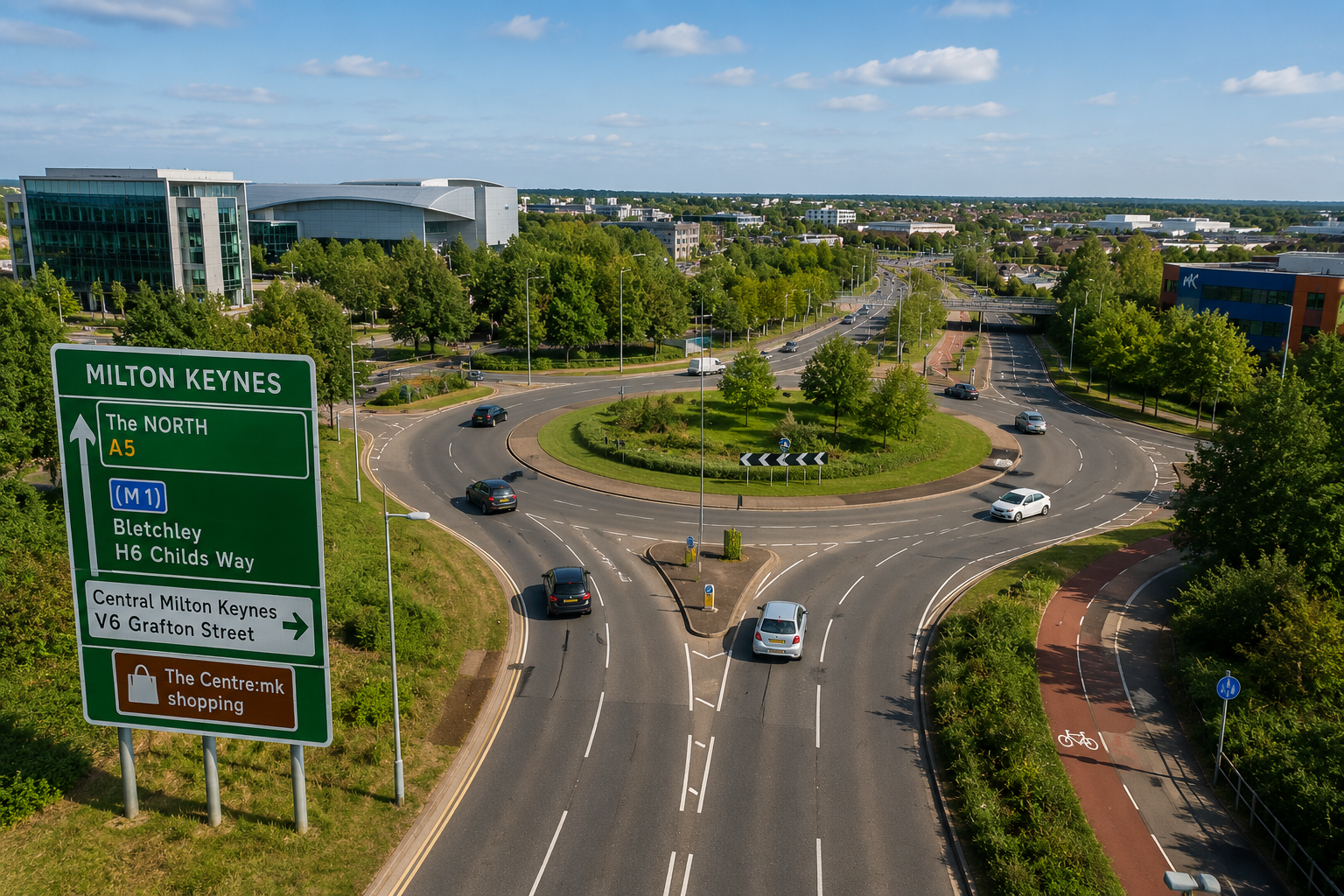
Driving in Milton Keynes can take a little getting used to. The city has a road layout that is quite different from many other parts of the UK, with grid roads, large roundabouts, Redways and separate pedestrian routes.
If you have recently moved to Milton Keynes, have started driving here, or are getting back behind the wheel after a break, understanding how the local roads work can make your journeys easier and less stressful.
Understanding The Milton Keynes Grid Road System
The grid road system is one of the first things you will notice when driving around Milton Keynes. Instead of having roads that all lead towards a traditional town centre, the city was planned around a network of major routes.
You will see roads such as the A5 alongside routes identified as H and V roads. H roads generally run horizontally across the city, while V roads run vertically.
Once you become familiar with the system, it can make finding your way around relatively simple. At first, though, the road names can be difficult to remember, particularly when someone gives you directions using a route number rather than a familiar place name.
If you are still learning the area, using a sat-nav or mapping app can help. It is also worth checking your route before setting off, particularly if you are travelling somewhere unfamiliar.
Be Prepared For Plenty Of Roundabouts
Roundabouts are a major part of the Milton Keynes road network. Some are relatively small, while others have several lanes and connect busy grid roads.
If you are unfamiliar with a particular roundabout, pay close attention to the signs and lane markings as you approach it. Getting into the appropriate lane early is generally easier than trying to change lanes at the last moment.
Large roundabouts can become busy at peak times, so allow yourself enough time to approach, read the road markings and make your manoeuvre safely. If you miss your exit, it is usually better to continue around and take the correct route rather than make a sudden change.
Look Out For Milton Keynes’ Redways
The Redway network is another feature that makes Milton Keynes different from many other towns and cities. These paths provide routes for cyclists and pedestrians away from much of the main road network.
For drivers, the important point is that Redways can cross roads at various locations. When approaching a junction or crossing, look carefully for cyclists and pedestrians and follow the relevant signs and road markings.
This is particularly important in residential areas and around schools, where there can be more pedestrian and cycle traffic at certain times of the day.
Getting Around The City Centre
Central Milton Keynes has a mixture of major roads, roundabouts, car parks and pedestrian areas. If you are heading into the centre, it is worth knowing where you intend to park before you leave.
The shopping centre and surrounding areas can become busy, particularly at weekends and during school holidays. Having a parking location in mind can save you from driving around unnecessarily once you arrive.
Pay attention to lane directions as you approach the centre as well. It can be easy to find yourself in the wrong lane if you are concentrating on finding a car park or following your sat-nav.
Driving During Busy Periods
Milton Keynes can become noticeably busier during the morning and afternoon rush hours. Roads around schools, employment areas, shopping destinations and major junctions can all see heavier traffic.
If you have an important appointment or need to arrive somewhere at a specific time, allow some extra time for your journey. A route that normally takes 20 minutes can take considerably longer when traffic builds up.
It can also help to learn a few alternative routes once you have become familiar with the area. However, avoid using residential streets simply to save a few minutes if the route is unsuitable or restricted.
Watch Your Speed
Some roads in Milton Keynes are wide and relatively open, which can make it easy to underestimate how quickly you are travelling.
Always check the posted speed limit rather than relying on how the road looks or what speed other vehicles are doing. Speed limits can change when you move from a main grid road into a residential area, so keep checking the signs.
Your speed should also reflect the conditions. Rain, poor visibility, heavy traffic and pedestrians or cyclists near the road can all require you to slow down.
Make Sure Your Vehicle Is Ready For Local Driving
Knowing the roads is important, but the condition of your vehicle matters just as much. Before setting off on a longer journey, it is worth checking the basics, including your tyres, lights, oil and screenwash.
Pay attention to changes in the way your vehicle feels or sounds. A warning light, unusual noise, vibration, difficulty steering or change in braking performance should not be ignored.
The same applies to transmission problems. If your car begins hesitating when changing gear, slipping between gears or behaving differently when selecting drive or reverse, it is sensible to have the issue investigated rather than continuing to drive and hoping it disappears.
Regular servicing can also help identify developing problems before they leave you with an unexpected breakdown.
Building Confidence On Milton Keynes Roads
If you are new to Milton Keynes, you do not need to learn the entire road network at once. Start with the routes you use most often and become familiar with the main H and V roads in your area.
Over time, you will recognise the larger roundabouts, understand which roads connect different parts of the city and become more comfortable navigating without relying entirely on your sat-nav.
For returning drivers, the same approach can help. Take some time to get used to the local roads again, particularly if you have not driven in Milton Keynes for several years. Traffic patterns, road layouts and speed limits can change, so avoid assuming that a route is exactly as you remember it.
Milton Keynes’ road system may seem unusual when you first encounter it, but it becomes much easier to navigate with experience. Take your time, follow the signs and road markings, and make sure your vehicle is properly maintained. Those simple habits can make a noticeable difference to everyday driving in Milton Keynes.