


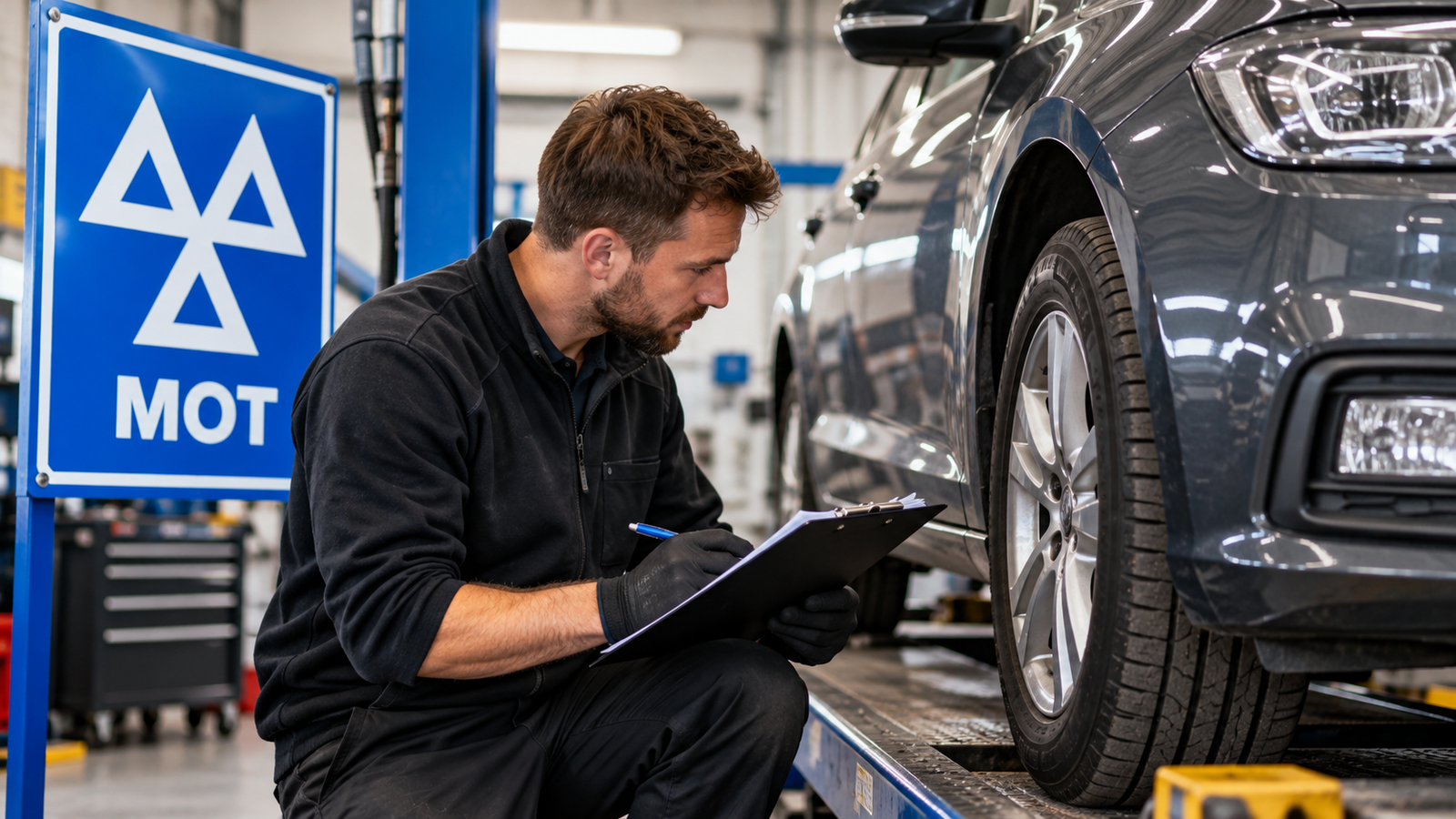
Failed Your MOT In Milton Keynes?
Here’s What To Do Next
Discovering that your car has failed its MOT can be frustrating, particularly if you rely on your vehicle for commuting, family commitments or everyday journeys. The good news is that an MOT failure does not necessarily mean you are facing a major repair bill or that your car is beyond economical repair.
The important thing is to understand why your vehicle failed, determine whether it is safe and legal to drive, and arrange the necessary repairs before your next test.
If you have recently failed an MOT in Milton Keynes or Bletchley, this guide explains what to do next, how MOT retests work and what to consider when choosing a local garage.
Understand Why Your Car Failed Its MOT
The first step after an MOT failure is to understand exactly what the examiner found.
An MOT test checks whether a vehicle meets the required safety and environmental standards. It covers components such as brakes, tyres, steering, suspension, lights, seat belts and emissions. However, it is not a complete mechanical inspection of every part of your car.
When your vehicle fails, you will receive a report identifying the defects responsible for the result. These are categorised according to their severity.
Major defects are problems serious enough to cause an MOT failure. Examples include certain braking faults, excessively worn tyres and problems with steering components.
Dangerous defects are more serious problems that present an immediate risk to road safety or have another significant safety implication. A vehicle with a dangerous defect must not be driven until the relevant issue has been resolved.
Your report might also mention minor defects or advisories. These do not automatically mean your vehicle has failed, but they highlight issues that may need attention.
Take time to read the report carefully. If anything is unclear, ask the MOT testing centre to explain the findings in plain English. Understanding the problem will help you make an informed decision about the next steps.
Can You Drive Your Car After A Failed MOT?
This is one of the most important questions to answer after an MOT failure.
Whether you can legally drive your car away depends on your existing MOT certificate and the defects identified during the test.
According to GOV.UK guidance on MOT test results, you can generally take your vehicle away after a failed test if your current MOT certificate is still valid and the examiner has not recorded any dangerous defects.
However, the vehicle must still meet the minimum legal standards of roadworthiness. A valid MOT certificate does not make an unsafe vehicle legal to drive.
If your car has a dangerous defect, you must not drive it until the problem has been repaired. Similarly, if your existing MOT has expired and your vehicle fails its new test, you should not simply drive it home or to a repair garage.
There is a limited exception allowing certain journeys to a pre-arranged MOT test without a valid certificate, but it should not be treated as general permission to drive an untested or defective vehicle.
If you are unsure whether your car can be driven, speak to the testing centre before making arrangements. Depending on the circumstances, you may need to organise repairs on-site or arrange suitable vehicle recovery.
It is always better to clarify the rules than risk a fine, penalty points or an accident.
Get A Clear Explanation Of The Required Repairs
Once you understand the failure report, the next step is to find out what needs fixing.
Some MOT failures involve relatively straightforward issues, such as a defective bulb or worn windscreen wiper. Others involve more substantial repairs to components such as the braking system, suspension or steering.
The cost will depend on the specific fault, the parts required and the work involved. Avoid assuming that every MOT failure will be expensive, but equally, do not overlook a serious problem simply because the vehicle appears to drive normally.
If the report lists several defects, ask the garage to explain which repairs are essential to achieve an MOT pass and whether any additional work is recommended for safety or reliability.
Before authorising repairs, it is sensible to request a clear explanation of the work and its expected cost. This allows you to understand what you are paying for and make an informed decision.
Arrange Repairs As Soon As Practical
Once you have agreed on the necessary work, arrange for the defects to be repaired.
Depending on the problem, this might involve replacing worn tyres, repairing faulty lights, addressing brake issues or investigating emissions problems. The repair process will vary from vehicle to vehicle, so there is no universal solution for an MOT failure.
It is important to use a competent garage and ensure that the relevant defects are properly rectified. A temporary fix that does not resolve the underlying problem could leave you with another failure at the next test.
You should also consider any advisory notices included in your report. While advisories do not prevent an MOT pass, they can identify developing problems that may become more serious over time.
For example, an advisory concerning tyre wear could indicate that you need to monitor the tyres closely or investigate a possible wheel-alignment issue. Addressing such problems early may help prevent further deterioration and unnecessary expense.
If your vehicle has failed because of several defects, ask the garage whether any of the problems could be related. For instance, uneven tyre wear and certain suspension issues can sometimes have a common underlying cause.
Taking a considered approach to repairs can help you resolve the immediate MOT failure while also improving your vehicle’s overall condition.
Understand How An MOT Retest Works
After the necessary repairs have been completed, your vehicle will need to be examined again to confirm that it meets the required standards.
In some circumstances, a partial retest may be possible rather than repeating the entire MOT. The arrangements and any applicable fees depend on where the repairs are carried out, how quickly the vehicle returns for testing and the defects involved.
For example, under the relevant Driver and Vehicle Standards Agency rules, a vehicle that remains at the original testing station for repairs may qualify for a retest without an additional test fee if it is re-examined within the specified period.
If you take the vehicle away for repairs and return it to the same testing station before the end of the tenth working day following the original test, a partial retest may be available. A fee of up to half the statutory maximum test fee may apply.
There are also specific circumstances in which certain defects qualify for a no-fee retest under separate rules.
These arrangements can be confusing, so ask the garage to explain which retest conditions apply to your vehicle. You should also check whether your chosen MOT package includes any additional retest benefits.
The official GOV.UK MOT testing guide provides further information about retest fees and eligibility.
One important point: a retest is not an automatic guarantee of a pass. The relevant defects must be properly repaired, and the vehicle must meet the applicable testing standards.
What If You Disagree With The MOT Result?
Occasionally, a motorist may believe that an MOT failure is incorrect or that a defect has been assessed unfairly.
If this happens, start by asking the testing centre to explain why the vehicle failed. Discussing the specific finding may help clarify whether there has been a misunderstanding.
If you remain dissatisfied, you can consult the official GOV.UK guidance on MOT test result appeals.
Follow the applicable appeal procedure promptly, as time limits and other requirements apply. Avoid authorising repairs or altering the relevant components before checking the appropriate procedure if you intend to challenge the result.
Regardless of whether you dispute the result, any defect presenting a safety risk should be treated seriously. Do not drive a vehicle with a dangerous defect while trying to resolve a disagreement about the test.
Frequently Asked Questions About Failed MOTs
Can I drive my car if it fails its MOT?
You can generally drive it away only if your existing MOT remains valid and no dangerous defects have been recorded, and the vehicle is still roadworthy. If it has dangerous defects or its MOT has expired, you will need to resolve the relevant issues before driving it.
How much does an MOT retest cost?
The cost depends on the circumstances of the original failure, the type of retest required and the garage’s pricing arrangements. Some retests are free under the applicable rules, while partial retests may incur a fee. Check the terms with your testing centre.
How long do I have to get my car retested after a failure?
The applicable retest arrangements depend on when and where the repairs are carried out. Returning to the same testing station within the relevant period can allow a partial retest, but eligibility and fees vary. Contact the garage promptly to confirm your options.
Can a car fail its MOT because of something minor?
Yes. A relatively straightforward issue can result in a failure if it meets the criteria for a major defect. Minor defects and advisories, however, do not automatically cause a vehicle to fail.
Should I repair MOT advisories immediately?
Not every advisory requires immediate repair, but it is important to understand what the examiner has identified. Safety-related issues should be prioritised, and developing problems should be monitored or repaired before they worsen.
Get Help After an MOT Failure in Milton Keynes
Failing an MOT can be inconvenient, but understanding the result and acting promptly can help you get back on the road with confidence.
Read the failure report carefully, check whether your vehicle can legally and safely be driven, obtain a clear explanation of any necessary repairs and confirm the arrangements for a retest.