


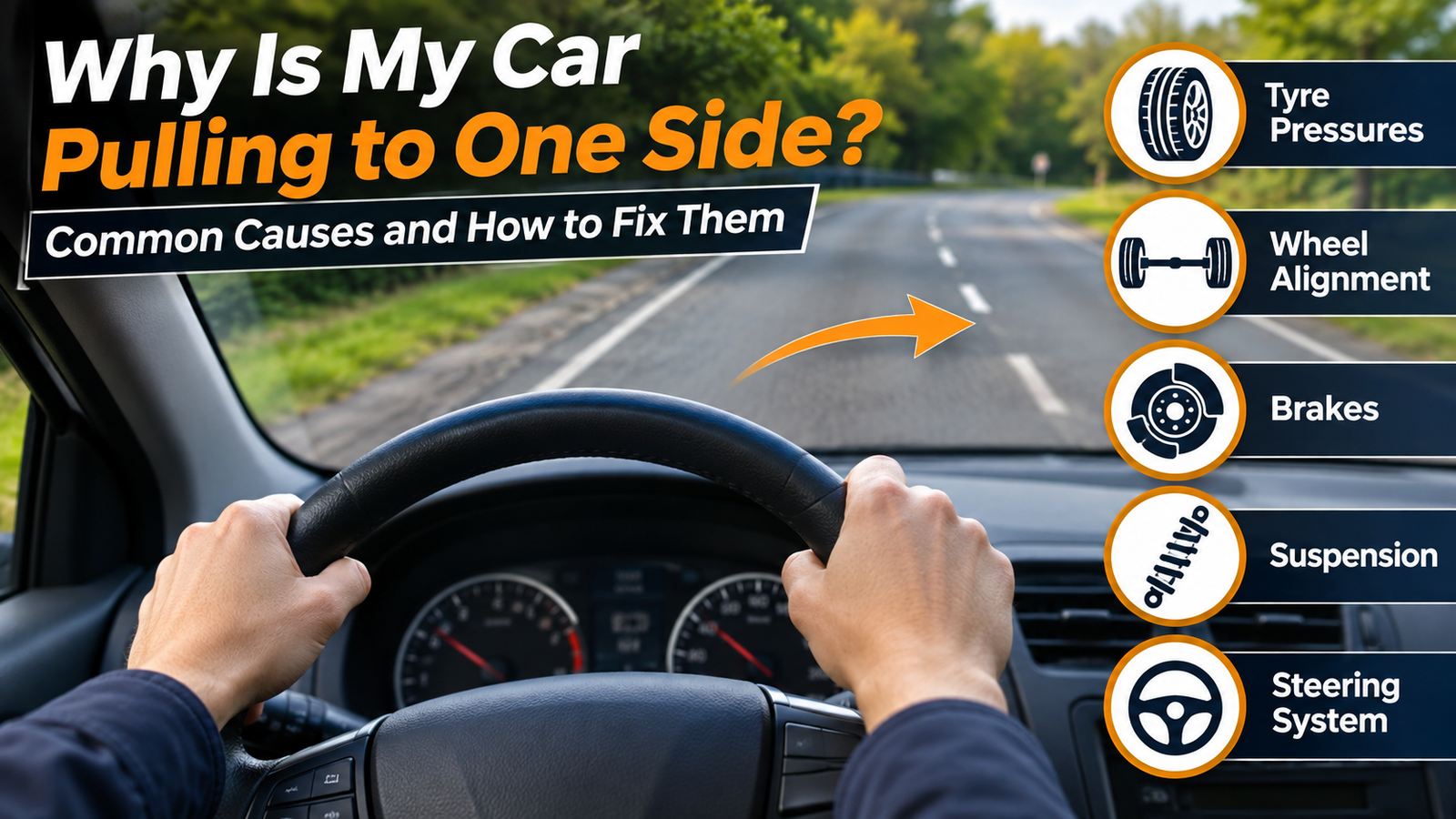
Why Is My Car Pulling To One Side?
The Common Causes And How To Fix Them
When you’re driving along a straight road, you expect your car to travel smoothly without having to constantly adjust the steering wheel. However, if your vehicle starts drifting or pulling to the left or right, it could indicate an underlying problem that needs attention.
A car pulling to one side can be caused by several issues, ranging from something relatively straightforward, such as uneven tyre pressures, to more serious problems involving the brakes, suspension or wheel alignment.
Although the problem might initially seem like a minor inconvenience, it can affect your vehicle’s handling, increase tyre wear and potentially compromise your safety on the road.
Understanding what might be causing the problem is the first step towards getting it resolved. In this guide, we’ll explore some of the most common reasons why cars pull to one side, the warning signs to look out for and when to arrange a professional inspection.
Incorrect Or Uneven Tyre Pressures
One of the simplest explanations for a car pulling to one side is uneven tyre pressure.
Your vehicle’s tyres need to maintain the correct pressure to provide consistent grip, stability and handling. If one tyre is significantly underinflated compared with the others, it can create uneven rolling resistance and affect how your car behaves on the road.
For example, if one of your front tyres has a much lower pressure than the other, you might notice that your vehicle tends to drift towards that side.
Incorrect tyre pressures can also affect braking performance, fuel efficiency and the rate at which your tyres wear.
What should you do?
Start by checking the pressure in all four tyres using a suitable pressure gauge. Your vehicle manufacturer’s recommended pressures can usually be found on a label inside the driver’s door, around the fuel filler flap or in your owner’s handbook.
It’s best to check tyre pressures when the tyres are cold, and remember that the recommended figures may vary depending on the number of passengers and the amount of luggage you’re carrying.
If one tyre repeatedly loses pressure, there could be a slow puncture, damaged valve or another problem that needs investigating.
Correcting uneven tyre pressures may resolve the issue, but persistent pulling should always be investigated further.
Poor Wheel Alignment
Wheel alignment problems are another common reason why a vehicle might pull towards one side.
Wheel alignment refers to the positioning and angles of your vehicle’s wheels in relation to one another and the manufacturer’s specifications. When everything is correctly aligned, your tyres should maintain the intended contact with the road, helping your vehicle travel straight and handle predictably.
However, wheel alignment can gradually become affected by everyday driving.
Hitting potholes, mounting kerbs, driving over uneven surfaces or experiencing an impact can alter the alignment of your wheels. Suspension repairs or replacement components can also mean that the alignment needs checking.
When your wheels are no longer correctly aligned, you might notice several symptoms:
- Your car consistently pulls towards the left or right.
- The steering wheel sits slightly off-centre when driving straight.
- Your tyres develop uneven or premature wear.
- The steering feels less responsive than usual.
- Your vehicle feels less stable when travelling at higher speeds.
Poor alignment can also cause unnecessary strain on your tyres and steering components. Over time, this may mean replacing your tyres sooner than expected.
How can wheel alignment be corrected?
A professional wheel alignment check uses specialist equipment to measure the angles of your wheels and compare them with the manufacturer’s recommended settings.
Four-wheel alignment examines the positioning of all four wheels rather than concentrating solely on the front axle. This can be particularly important on vehicles where rear-wheel alignment influences how the vehicle tracks along the road.
If your car is pulling to one side, having the alignment checked can help identify whether incorrect wheel positioning is contributing to the problem.
Uneven Or Damaged Tyres
Even when tyre pressures are correct and your wheel alignment appears to be within specification, problems with the tyres themselves can still affect your vehicle’s handling.
Tyres gradually wear down as they come into contact with the road. However, this wear isn’t always distributed evenly across the tread.
For example, one tyre might have considerably less tread than its opposite number, or the inside or outside edge of a tyre might have worn more quickly.
Differences in tyre condition, construction or wear can affect the way your vehicle responds to steering inputs and maintains contact with the road.
Physical tyre damage can also create problems. Bulges, cuts, impact damage and internal structural defects can affect the stability of a tyre and make the vehicle feel less predictable.
It’s worth paying attention to the following warning signs:
- Uneven tread wear across your tyres.
- Visible cuts, cracks or bulges in the sidewalls.
- Repeated loss of pressure in one tyre.
- Unusual vibrations through the steering wheel.
- Noticeable differences in the condition of tyres fitted to the same axle.
What should you do?
Inspect your tyres regularly, checking the tread, sidewalls and overall condition. The legal minimum tread depth for car tyres in the UK is 1.6mm across the central three-quarters of the tread, around the entire circumference.
However, tyres can become less effective in wet conditions well before reaching this minimum.
If you notice significant differences in tyre wear or any visible damage, arrange a professional inspection. Damaged tyres may need replacing, while uneven wear could indicate an underlying alignment or suspension problem.
Problems With Your Brakes
If your vehicle mainly pulls to one side when you apply the brakes, the braking system could be responsible.
Your car’s braking system is designed to distribute braking force appropriately across the wheels. If one side develops a fault, the braking force can become uneven, causing the vehicle to move towards one side as it slows down.
One potential cause is a sticking or seized brake calliper.
Brake callipers are responsible for pressing the brake pads against the discs when you apply the brakes. If a calliper becomes restricted or fails to operate correctly, it can affect how effectively that particular wheel brakes.
Other potential causes include:
- Unevenly worn brake pads.
- Damaged or corroded brake components.
- Restricted brake fluid movement.
- Problems with brake hoses.
- Uneven braking performance between the wheels.
A sticking brake can sometimes cause problems even when you’re not actively braking. You might notice that the vehicle feels sluggish, a wheel becomes unusually hot or there’s a burning smell after driving.
Why should you take brake problems seriously?
Your brakes are among the most important safety systems fitted to your vehicle. Any problem affecting their performance needs to be investigated promptly.
If your car pulls noticeably when braking, produces unusual noises or shows other signs of brake trouble, arrange a professional inspection.
If the vehicle pulls strongly, braking performance has deteriorated, or you notice smoke, a burning smell or a soft brake pedal, stop somewhere safe and arrange professional assistance rather than continuing to drive.
Worn Suspension Components
Your vehicle’s suspension system plays an important role in maintaining stability, controlling movement and keeping the tyres in contact with the road.
It consists of several components, including springs, shock absorbers, suspension arms, bushes and ball joints.
Over time, these parts can deteriorate through normal wear and tear, particularly if your vehicle regularly travels over potholes, uneven surfaces or damaged roads.
When suspension components become worn or damaged, they can affect the positioning of your wheels and the way your vehicle responds to steering inputs.
This can result in your car pulling to one side, particularly when accelerating, braking or travelling over uneven surfaces.
Other symptoms of suspension problems might include:
- Knocking or clunking noises when travelling over bumps.
- Excessive bouncing after hitting an uneven road surface.
- Uneven tyre wear.
- Poor steering response.
- A vehicle that feels unstable when cornering.
Suspension problems should never be overlooked. Apart from making your vehicle less comfortable to drive, worn components can affect handling, braking and overall road safety.
A professional inspection can help identify damaged or deteriorating parts and establish whether repairs or replacements are necessary.
Steering System Problems
Your vehicle’s steering system is responsible for translating movements of the steering wheel into changes in the direction of your wheels.
If components within this system become worn, damaged or incorrectly adjusted, you might experience difficulties keeping your vehicle travelling in a straight line.
Potential problems include worn track rod ends, damaged steering joints, loose steering components or faults within the steering rack.
Depending on the nature of the problem, you might notice that the steering feels unusually loose, stiff or unresponsive.
In some cases, there may also be knocking noises when turning the steering wheel or travelling over uneven surfaces.
Steering faults can have a significant effect on vehicle control, so they should always be investigated by a qualified mechanic.
The Road Surface Could Be Affecting Your Car
It’s worth remembering that not every slight movement towards one side means something is wrong with your vehicle.
Road surfaces are not always completely level. Many roads have a slight slope, known as camber, which helps rainwater drain towards the edges.
Depending on the road’s shape and the direction you’re travelling, this slope can sometimes make a vehicle feel as though it’s drifting slightly towards one side.
Temporary changes in road surface, uneven tarmac and strong crosswinds can also influence how your vehicle behaves.
Milton Keynes and Bletchley motorists regularly encounter different types of road surfaces, from busy town centre routes to residential roads and faster surrounding routes.
Potholes, damaged road surfaces and impacts with kerbs can also contribute to problems with tyres, suspension and wheel alignment.
If your vehicle only appears to drift slightly on a particular stretch of road, the surface might be contributing to the sensation.
However, if the problem persists across different roads, becomes more noticeable or requires constant steering correction, it’s important to have the vehicle checked rather than assuming the road is responsible.
What Should You Do If Your Car Starts Pulling To One Side?
If you notice your car consistently pulling towards the left or right, it’s worth investigating the problem sooner rather than later.
Ignoring the warning signs could allow a relatively straightforward issue to develop into a more significant repair.
There are a few sensible steps you can take:
1. Check your tyre pressures
Start with the basics by checking all four tyres against the manufacturer’s recommended pressures. Look for significant differences between the tyres on the same axle.
2. Inspect the condition of your tyres
Look for uneven tread wear, visible damage, cuts or bulges. Any suspected structural damage should be assessed professionally.
3. Pay attention to when the problem occurs
Does your vehicle pull continuously when driving straight, or does the problem mainly happen when you apply the brakes? Does it become more noticeable when travelling over bumps?
These details can help a mechanic narrow down the potential causes.
4. Arrange a professional inspection
If the problem persists, a mechanic can inspect the tyres, brakes, steering and suspension before determining whether wheel alignment or further repairs are required.
Avoid trying to diagnose the problem simply by guessing which component needs replacing. Several different faults can produce very similar symptoms.
If the vehicle suddenly develops a strong pull, becomes difficult to control or shows signs of a potentially serious brake, steering or tyre fault, stop somewhere safe and arrange recovery.
Car Pulling To One Side? Visit Eclipse Autos!
A car that pulls to one side can be an early indication of problems with your tyres, brakes, suspension, steering or wheel alignment.
Identifying the underlying cause is important for maintaining predictable handling, protecting your tyres and ensuring your vehicle remains safe to drive.
At Eclipse Autos, we provide professional vehicle repairs and maintenance for motorists in Milton Keynes, Bletchley and the surrounding areas.
Our services include four-wheel alignment, brake repairs, vehicle diagnostics and general car repairs. Whether you’re experiencing steering problems, uneven tyre wear or concerns about your vehicle’s handling, our experienced team can help investigate the issue and explain the work that may be required.
We believe in providing straightforward advice, transparent pricing and quality workmanship, ensuring customers understand any recommended repairs before work begins.
If your car is pulling to one side, contact Eclipse Autos on 01908 448169 to discuss the problem and arrange an inspection.
Frequently Asked Questions
Why does my car pull to the left when driving?
A car pulling to the left can be caused by several issues, including uneven tyre pressures, poor wheel alignment, uneven tyre wear, damaged tyres or problems with the suspension and steering. A sloping road surface can also contribute to slight drifting. If the problem persists, arrange a professional inspection to identify the cause.
Why does my car pull to one side when braking?
If your vehicle only pulls to one side when you apply the brakes, there could be an issue with the braking system. A sticking brake calliper, unevenly worn brake pads or a fault affecting braking pressure can cause braking forces to become uneven. As this can affect stopping performance, the vehicle should be inspected promptly.
Can incorrect tyre pressure cause a car to pull to one side?
Yes. A significant difference in tyre pressure can affect rolling resistance, steering response and vehicle stability. An underinflated tyre may cause your car to drift towards one side. Check all four tyres against the manufacturer’s recommended pressures.
Can wheel alignment cause a steering wheel to sit crooked?
Yes. Incorrect wheel alignment can cause the steering wheel to sit off-centre when the vehicle is travelling straight. You might also notice uneven tyre wear or the car pulling towards one side. A professional alignment check can establish whether the wheel angles need adjusting.
Is it dangerous to drive a car that pulls to one side?
It can be. A slight drift might be influenced by road camber, but persistent or pronounced pulling could indicate problems with the tyres, brakes, steering or suspension. These faults can affect vehicle stability and control. If the pulling is sudden or severe, or braking and steering feel abnormal, stop safely and arrange professional assistance.
How do I know if my car needs wheel alignment?
Common signs include the vehicle pulling to one side, an off-centre steering wheel, uneven tyre wear and changes in handling. If you’ve recently hit a pothole or kerb, it’s also worth considering an alignment check, particularly if you notice changes in how the vehicle drives.
Can suspension problems cause a car to pull to one side?
Yes. Worn or damaged suspension components can affect wheel positioning and vehicle stability. Problems with suspension bushes, ball joints, suspension arms or springs can contribute to pulling, particularly when braking, accelerating or travelling over uneven surfaces.
How often should wheel alignment be checked?
There isn’t one universal interval that applies to every vehicle. Alignment checks are particularly worthwhile if you notice uneven tyre wear, steering problems or changes in handling, or after certain suspension and steering repairs. Your vehicle manufacturer’s recommendations and the condition of your car should help determine when a check is appropriate.
